Everywhere you look, someone is predicting that AI will "take our jobs." It's a headline that provokes fear and uncertainty — especially when the news cycle keeps repeating it. But the reality is more nuanced, and more useful, than the fear suggests.
This guide takes an honest look at AI and jobs: what's actually changing, what's likely to stay, and — most importantly — what you can do to stay valuable and adapt. No doom, no denial — just a realistic picture.
What we'll cover
The honest reality How work is actually changing How to stay valuable Skills that matterThe honest reality
Let's be clear-eyed about what's happening. AI is a powerful tool that's changing how work gets done. But the idea that "AI will replace all jobs" is an oversimplification. Here's the more accurate picture:
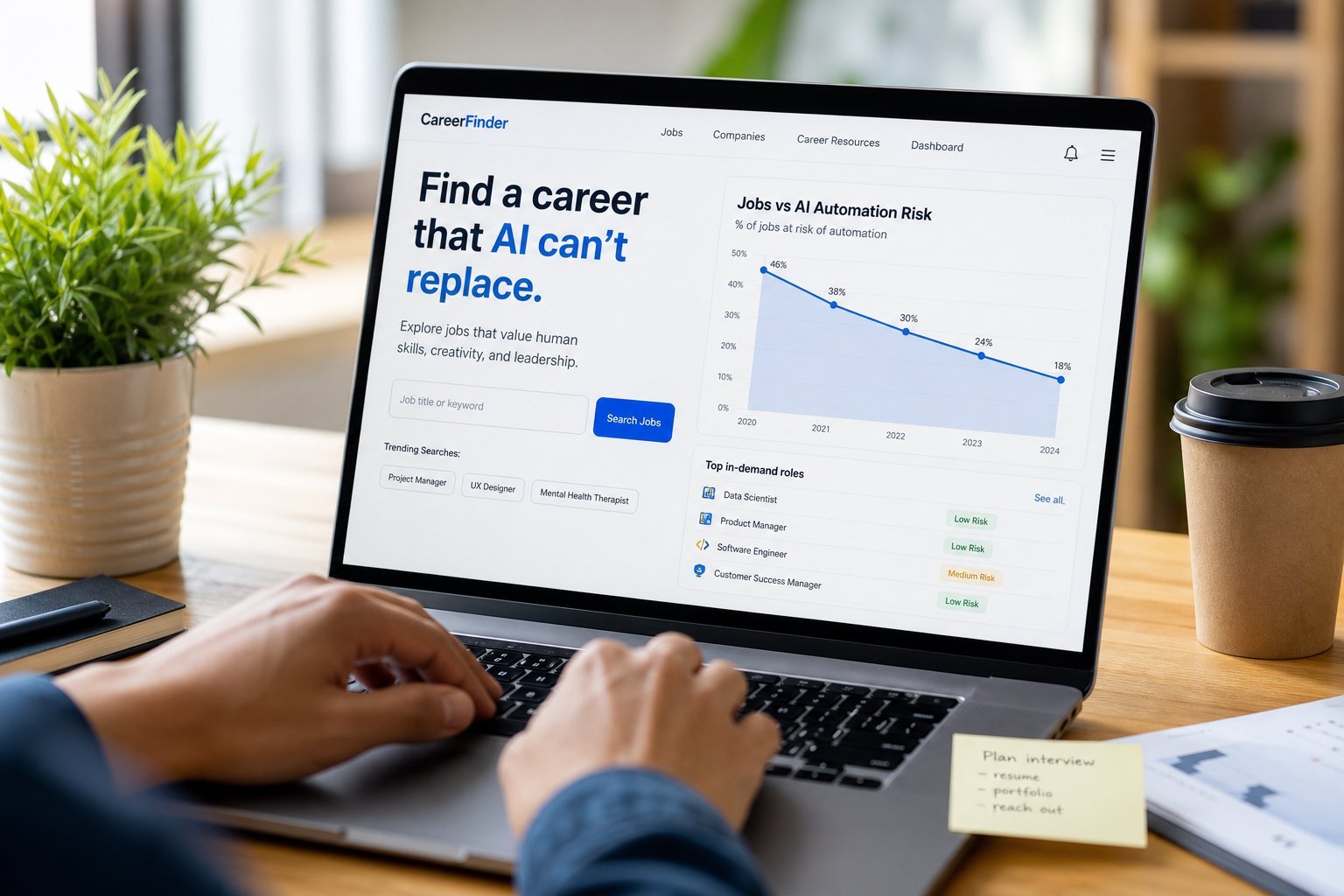
- AI automates tasks, not always whole jobs. Most jobs are a bundle of tasks. AI may automate some tasks, but many jobs involve human judgment, relationships and physical work that AI can't do.
- AI creates jobs too. New tools create new roles — people to build, train, manage and oversee AI, plus entirely new industries.
- The pattern is familiar. Every major technology (the calculator, the computer, the internet) changed work without eliminating it. It changed what people do.
The honest concern isn't "AI replaces everything." It's that some tasks and some roles will change significantly, and workers need to adapt. That's a real, manageable challenge — not an apocalypse.
How work is actually changing
Here's what's really shifting in many fields:
The change is real, but it's a shift in how work is done, not the end of work. People who adapt by learning to use AI tools well are positioned to benefit, not be replaced.
How to stay valuable
Rather than worrying, focus on what you can control. Here's how to stay valuable in a changing job market:
💡 The reframe
Instead of "Will AI replace me?", ask "How can I work with AI to be more valuable?" People who use AI as a tool tend to become more productive and valuable — not less. Adaptation is the real strategy.
Skills that matter
As AI automates routine tasks, these skills become more valuable:
- Critical thinking. Evaluating AI output, spotting errors and making good judgments (AI can be wrong — see our AI guide).
- Communication. Explaining, persuading and collaborating — things humans do well.
- Emotional intelligence and empathy. Building relationships and understanding people.
- Creativity. Generating novel ideas and applying them.
- Technical literacy. Understanding enough technology to use it effectively.
- Adaptability. Willingness to learn and change.
These are the skills that technology historically hasn't replaced — and they're exactly the ones worth investing in. AI may handle the routine; humans provide the judgment, creativity and connection.
📌 Bottom line
AI is changing work, but it's automating tasks, not eliminating all jobs — and it's creating new ones too. The real shift is in how work is done, not the end of it. To stay valuable, learn to use AI tools well, develop the skills AI can't replace (judgment, communication, empathy, creativity), and keep learning. Ask how to work with AI, not whether it will replace you. Adapting is the path forward, and it's very much in your control.