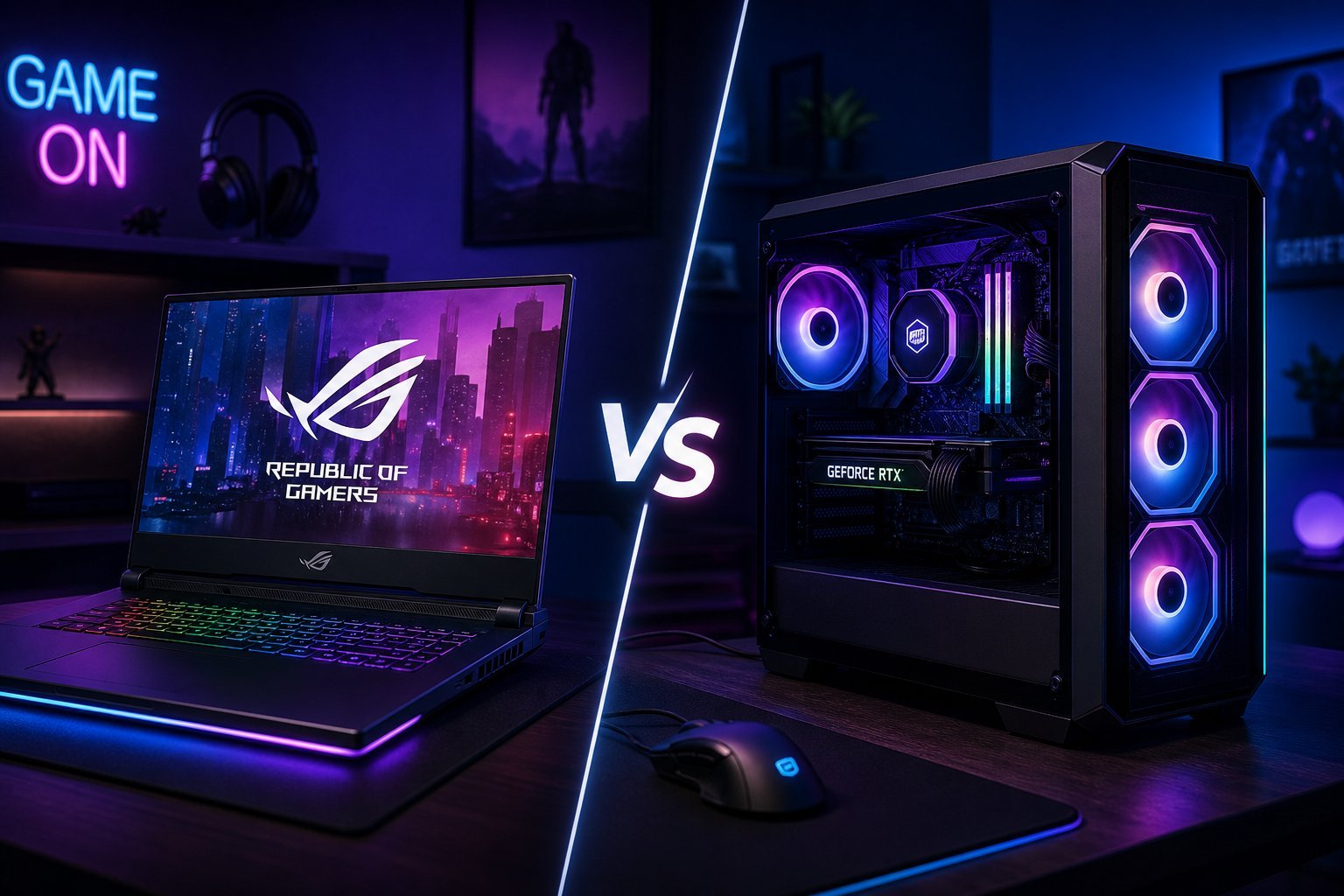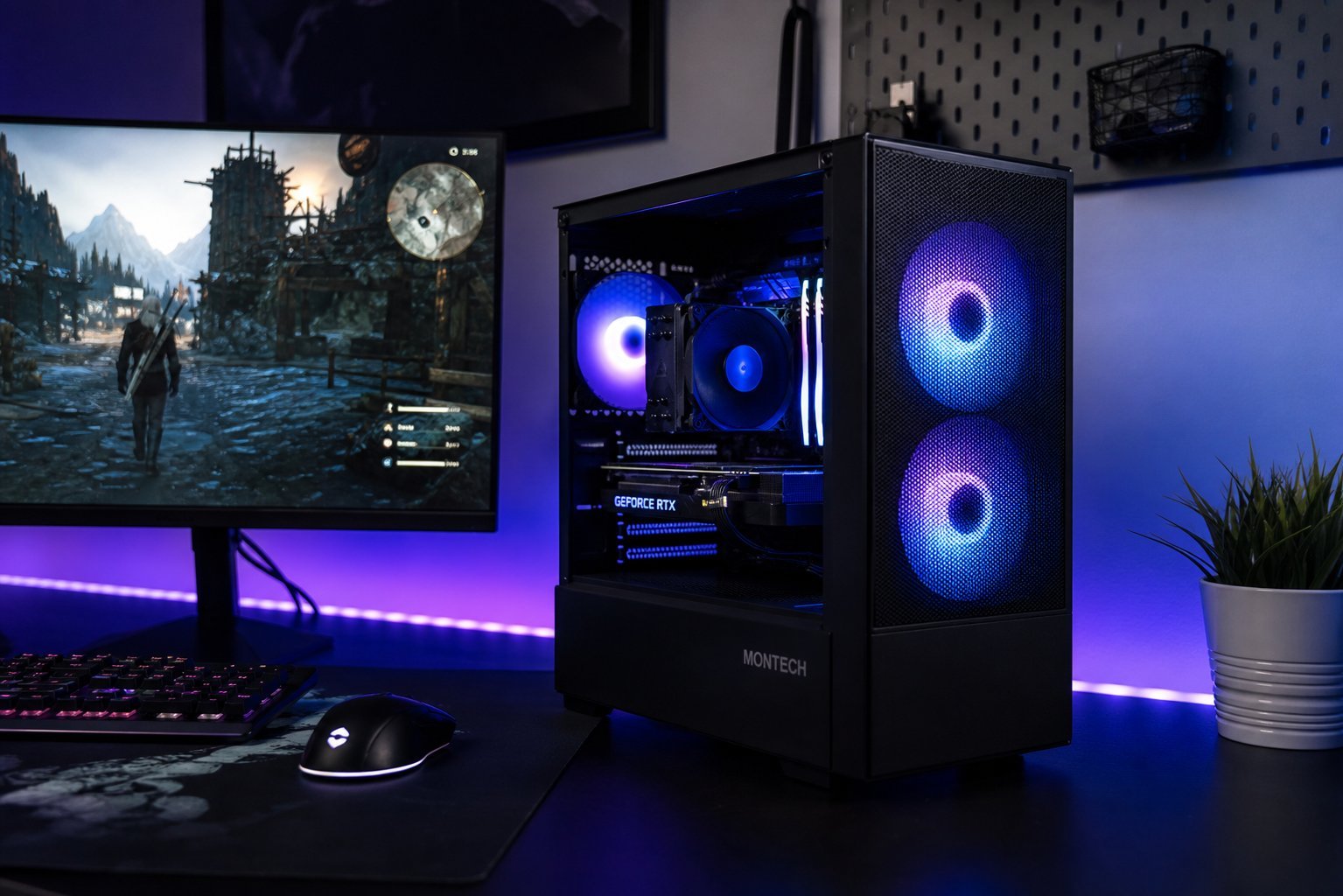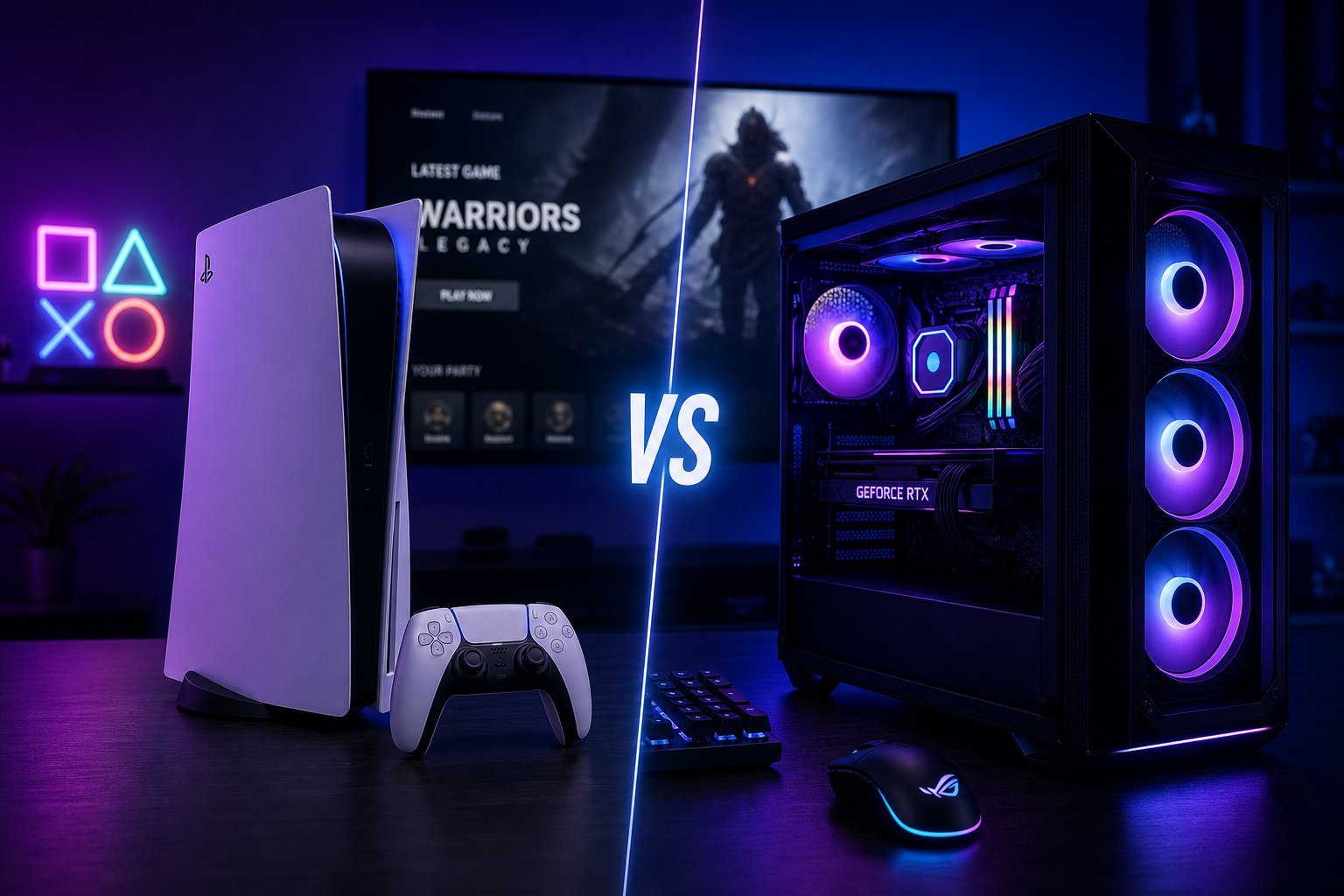
You want to play games, and you've reached the classic decision: a gaming console or a gaming PC? It's one of the oldest debates in gaming, and both sides have passionate fans. But the "right" answer isn't about which is objectively better — it's about which fits your budget, your space, and the way you like to play.
This guide compares consoles and gaming PCs on the things that genuinely matter: cost, ease of use, performance, games, and longevity. By the end, you'll know which camp is right for you.
What we'll compare
Cost & value Ease of use Performance Games & exclusives Longevity & upgrades Which should you choose?Cost & value
Let's start with the most concrete difference: what it costs to get started.
Consoles are cheaper to start. A current console is a one-time purchase that plays its games out of the box. You don't need to buy separate parts or worry about specs. Add a controller and a couple of games, and you're gaming.
Gaming PCs cost more upfront. A capable gaming PC is a bigger investment, especially when you add a monitor, keyboard and mouse. However, PCs go on sale, can be upgraded over time, and double as work/study machines.
For pure entry price, consoles win. But a PC is a multi-purpose machine, so the real cost depends on whether you'd need a computer anyway.
💡 The value question
If you only want to game, a console is the cheaper start. If you also need a computer for work or study, a gaming PC can serve double duty, making its higher price more justified.
Ease of use
This is where consoles have a clear advantage, and it's a big deal for many people.
Consoles are plug-and-play. Insert the disc (or download the game), and it works. No drivers, no settings to tweak, no compatibility worries. Everything "just works," which is exactly what many people want after a long day.
PCs offer more control but more fiddling. Games may need graphics settings adjusted, drivers updated, and occasional troubleshooting. That's fine for enthusiasts, but it's a barrier if you just want to sit down and play.
If your priority is a stress-free gaming session, a console is the easier choice. If you enjoy tweaking settings to optimize performance, a PC is more rewarding.
Performance
Performance is where the gap shifts depending on your budget.
At similar price points, a gaming PC generally offers more performance and flexibility — higher frame rates, better graphics settings, and the ability to upgrade the GPU later for more power. PC gaming is also where enthusiast features like ultra-wide monitors and high refresh rates shine.
Consoles offer excellent performance for the price because they're mass-produced with fixed, optimized hardware. A current console delivers great graphics and smooth gameplay that's very hard to match on a PC at the same price.
For the best raw performance possible, a high-end PC wins. For the best performance per dollar, a console is impressive.
Games & exclusives
Which games you want to play matters a lot — and this is where it gets personal.
- Console exclusives: PlayStation and Nintendo have flagship series (like God of War, Zelda, Mario) available only on their consoles. If these matter to you, the console decides it.
- PC library: The PC has the largest game library overall, including tons of indie games, older classics, and mods. Many console-exclusive games eventually come to PC too, but not always.
- Multiplayer & friends: If your friends all play on one platform, that's often the deciding factor — gaming with friends beats hardware specs.
The practical advice: check which games you genuinely want to play, and where your friends play, before deciding. Exclusive games can lock you into a platform more than any spec sheet.
Longevity & upgrades
How long will your setup last, and can you improve it?
Consoles have a fixed lifespan. A console generation lasts several years, but you can't upgrade the hardware inside. When it starts struggling with new games, you buy the next console.
Gaming PCs evolve. You can upgrade the graphics card, add memory, and swap storage over time. A well-maintained PC can stay current for years with incremental upgrades, rather than a full replacement.
If you like the idea of improving your machine over time, a PC gives you that path. If you'd rather not think about hardware, a console's fixed simplicity is a feature.
Which should you choose?
Let's turn it all into a clear decision guide:
✅ Choose a console if…
You want the cheapest, easiest way to start gaming · you value plug-and-play simplicity · you want to play console exclusives · you mainly want to sit on the couch and play · your friends game on console.
✅ Choose a gaming PC if…
You want the best performance and graphics · you enjoy tweaking and optimizing settings · you also need a computer for work/study · you want to upgrade over time · you love PC games, mods and the huge library.
✅ Console wins on
- Entry price
- Ease of use
- Plug-and-play
- Console exclusives
✅ PC wins on
- Peak performance
- Flexibility & mods
- Upgradeability
- Multi-purpose use
📌 Bottom line
Consoles are the cheap, easy, plug-and-play way to game with access to exclusives. Gaming PCs offer better peak performance, a huge game library, upgradeability, and double as a computer — for a higher entry cost and more fiddling. Ask yourself: how much do I want to spend, how much do I mind tinkering, and where do my friends play? Answer those, and the choice becomes clear.