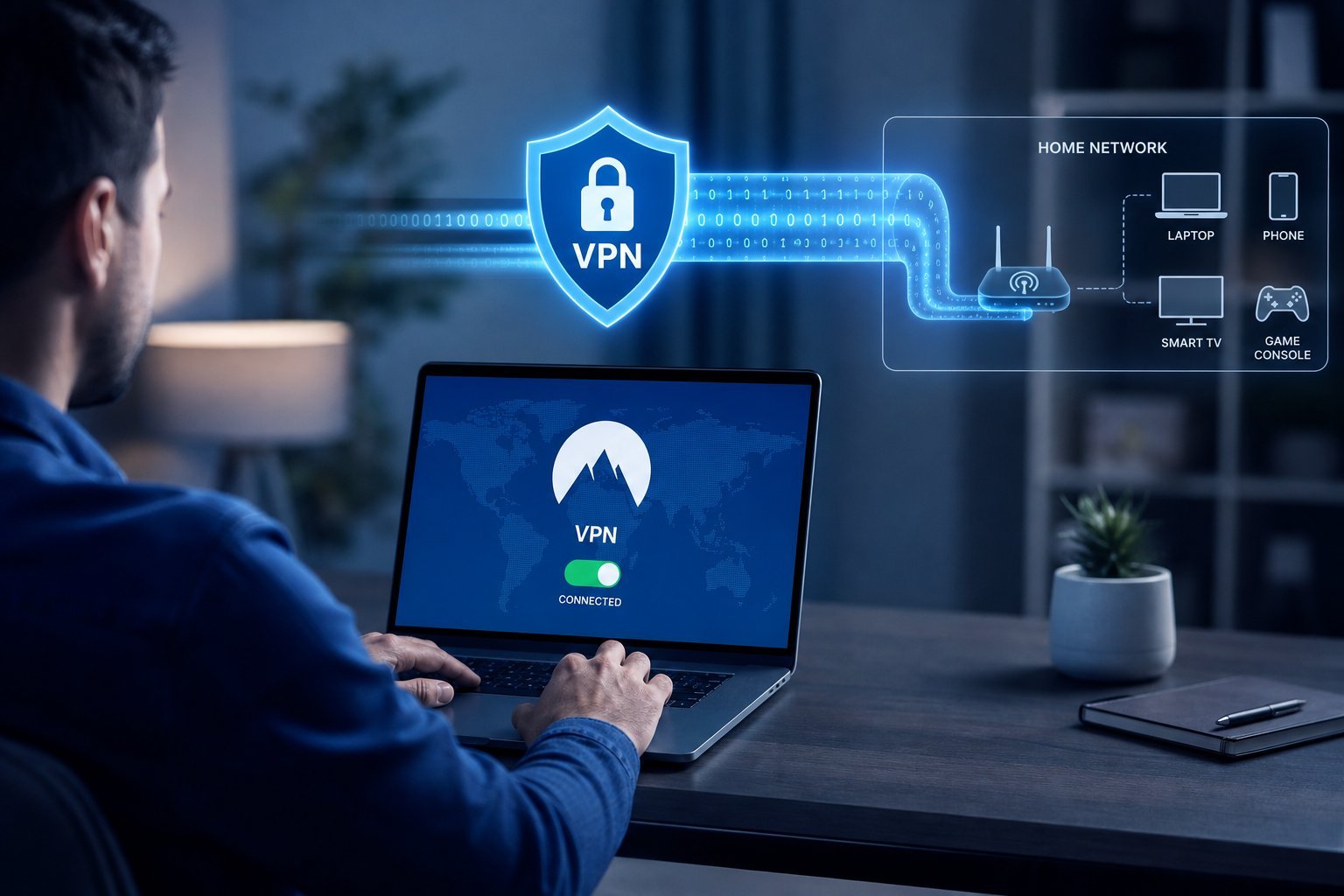
We've explained what a VPN does and how it helps on public Wi-Fi. But many people wonder: should I use a VPN at home too? The answer isn't a simple yes or no — it depends on your privacy priorities and internet habits.
This guide covers whether a VPN is worth it at home, the benefits and trade-offs, and how to decide.
The benefits at home
Using a VPN at home has real benefits:
The main benefit at home is privacy from your internet provider and an extra layer of encryption. If that matters to you, a home VPN is worthwhile.
The trade-offs
There are downsides to consider:
The trade-offs — speed, convenience, compatibility and cost — are worth weighing. For many people at home, the privacy benefit isn't worth these costs for everyday use.
How to decide
Here's how to decide whether a home VPN is right for you:
💡 The honest take
At home, a VPN is a privacy tool, not a security necessity — your home network is already secured by WPA2/WPA3 (see our Wi-Fi guide). The main benefit is hiding your browsing from your internet provider. If that matters to you, it's worth it; if not, you don't need it for everyday use. Weigh the speed and convenience trade-offs before subscribing.
✨ The "do I need it?" test
Ask: "Do I care that my internet provider can see which sites I visit?" If yes, a home VPN is worth it. If not, you can skip it for everyday use and just use a VPN on public Wi-Fi. It's a privacy preference, not a requirement.
📌 Bottom line
Using a VPN at home is about privacy, not security — your home network is already secured. The main benefit is hiding your browsing from your internet provider and adding an encryption layer. Consider the trade-offs: some speed loss, convenience, possible compatibility issues with streaming/banking, and subscription cost. If hiding your activity from your provider matters to you, a home VPN is worth it; otherwise, it's optional for everyday use. Weigh your priorities and try a reputable VPN before committing.